#1 Amazon Bestseller
Why Work Is Changing—and How to Stay Ahead
A book for the information workers and leaders navigating the most significant disruption their careers have ever seen.
Buy the Book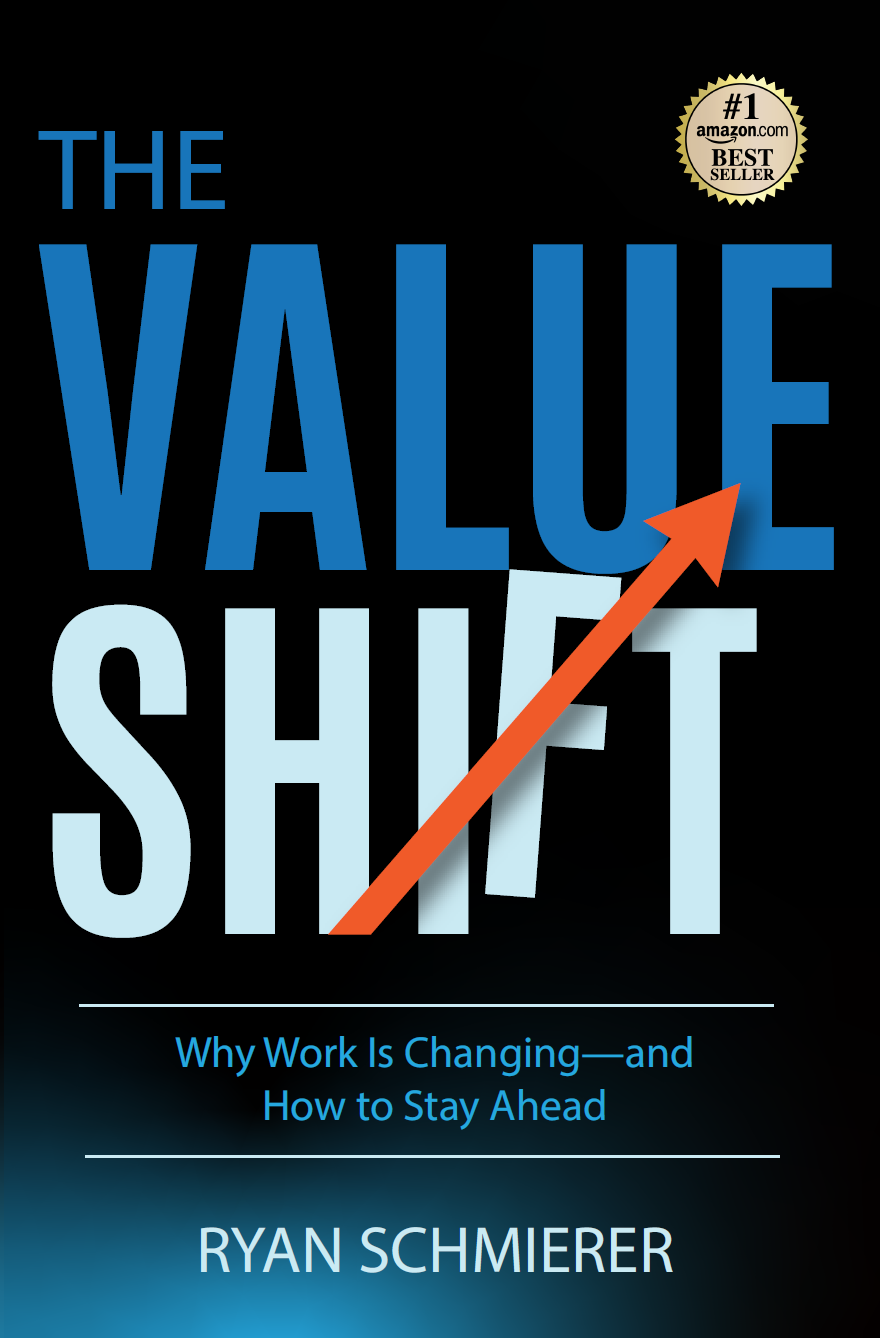
A book for the information workers and leaders navigating the most significant disruption their careers have ever seen.
Buy the Book
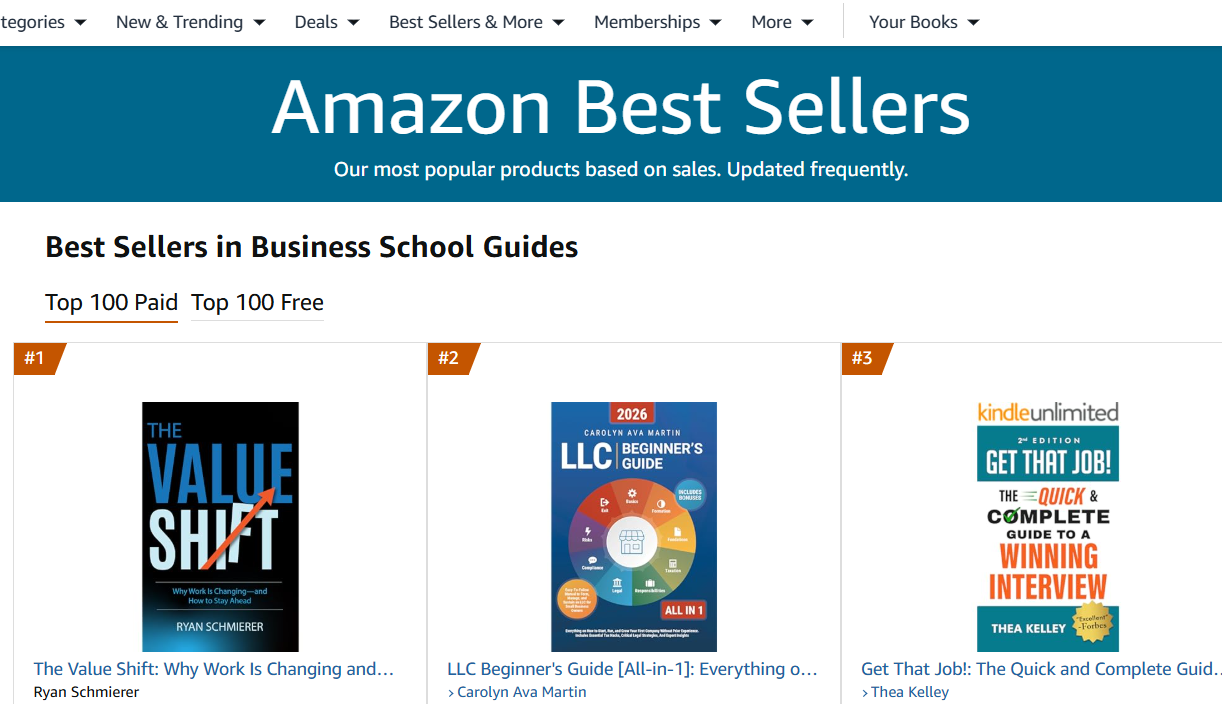
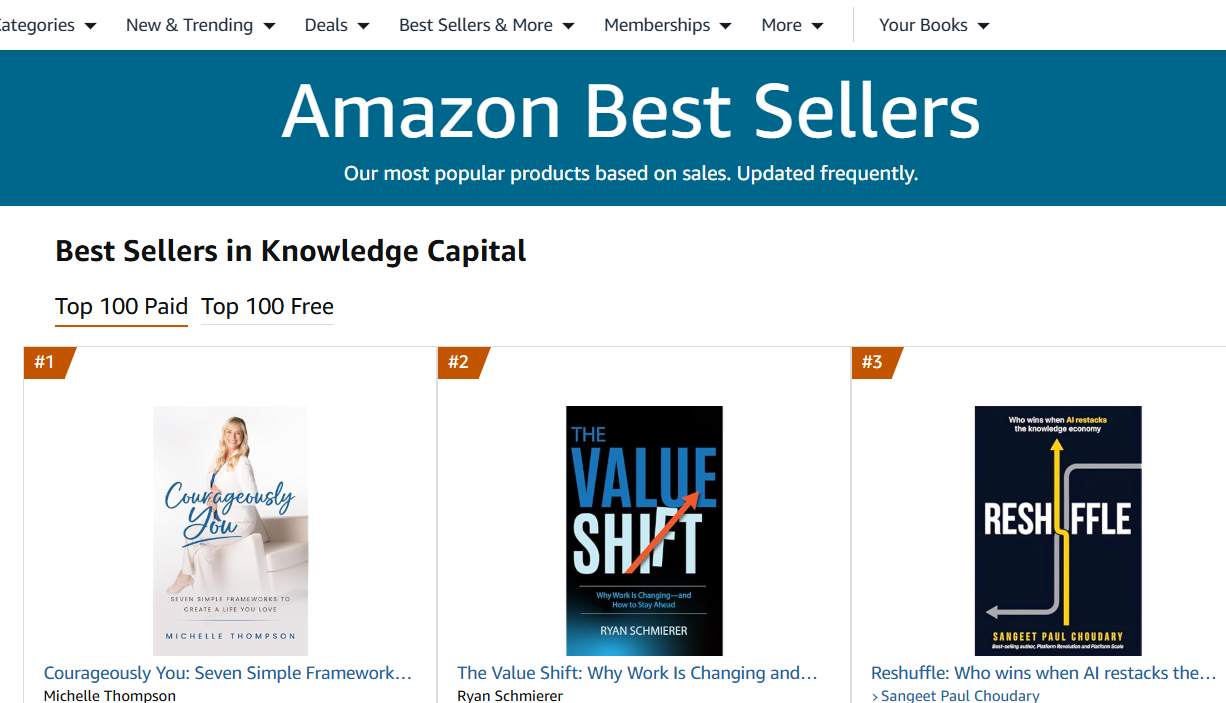
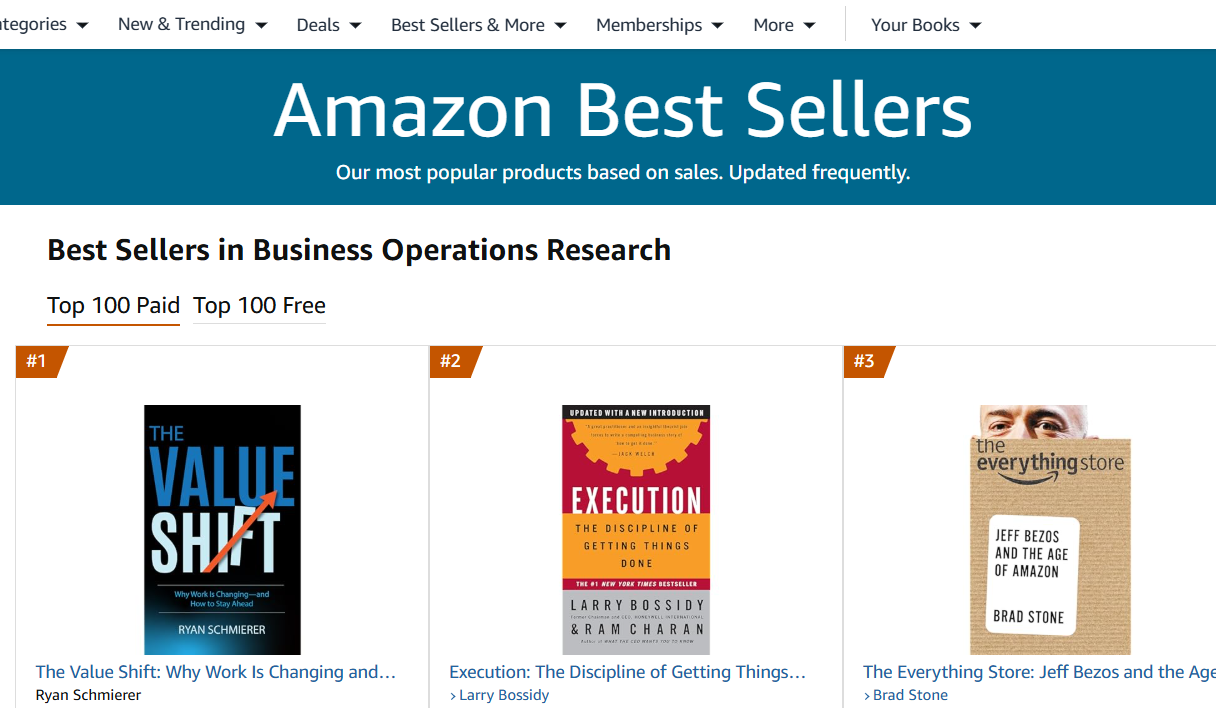
The Value Shift reached #1 in two Amazon categories and ranked #2 in a third at launch.
There's a moment most people remember. Maybe it was an all-hands meeting where AI came up in the same sentence as headcount. Maybe it was a headline, or a conversation with a colleague who just got let go, or a morning when you realized everything you've spent the last decade building might not be worth what you thought.
Whatever it was, it stopped you. The world kept moving. You didn't.
What you were feeling in that moment had a name, even if nobody said it out loud. The work you'd built your career on — moving information, analyzing it, packaging it, and passing it along — was losing value. AI can now do most of it faster and cheaper than any team of people.
You didn't do anything wrong. The work itself changed.
— From the Introduction, The Value ShiftAI is already disrupting information work, and the disruption doesn't respect the org chart. Leaders face one version of the challenge — how to use AI to grow, not just cut, and how to bring a team through a change that many of them aren't ready for. Employees face another — how to stay relevant, how to build the right skills before the window closes, how to position themselves for a world that rewards outcomes over attendance.
Both groups are navigating the same disruption from different seats. This book speaks to both of them.
The tools and frameworks inside these chapters won't expire when the next product announcement lands. Every major wave of technological disruption has followed the same pattern. The people who understood that — that the tool matters less than your ability to move with the change — came through it. The ones who bet their future on the tool staying the same did not.
This disruption is moving faster than any before it. But the core question is the same: are you building toward what's coming, or defending what you already know?
The people who come out of this with the most options aren't the ones who got the most warning. They're the ones who started moving first.— Ryan Schmierer, The Value Shift
The leaders who handle this well won't just protect their organizations. They'll build something better on the other side — if they start by being honest with their teams about what's happening and why.
This book helps you bring your team through a change that many of them aren't ready for, without losing their trust in the process.
The employees who move now will find themselves doing work that is harder, more consequential, and more worth doing than what came before.
But starting doesn't just mean updating your skills. It means showing up differently — staying curious, staying generous, and choosing to write the next chapter yourself before someone else does it for you.
Freezing is a biological response to a real threat. Your brain hasn't processed what's happening yet. You'll cycle through every stage of grief before you reach acceptance. Freezing is part of that cycle — it's denial's physical expression.
You will freeze at some point, if you haven't already. What matters is how long you allow yourself to stay there. The longer you stay frozen, the harder it gets to move. Newton's First Law of Motion tells us that an object at rest stays at rest until acted upon by an outside force. While you're in the freeze, the skills you could be building are not getting built. The positions that suit your background are getting filled. Stay there long enough, and your options shrink fast.
Give yourself permission to grieve. Then give yourself a deadline to move.
Ten chapters in three acts — from understanding the disruption, to building the tools, to seeing what the other side looks like.
The tools already exist. The question is whether you'll be ahead of the curve or behind it.
Why smart, capable people freeze — and what to do before the options shrink.
The system of trading hours for dollars was already failing before AI arrived.
Reclaiming the curiosity the system trained out of you — and building it into a practice.
Four questions that turn the most overwhelming moment of your career into a set of steps you can follow.
Everyone moving through this disruption has something to learn and something to teach.
Moving from the way you think to what you actually do differently, starting today.
What it already looks like on the other side — and who's living it.
Behind every threat is an opportunity. Train yourself to ask what's on the other side.
The chapter you're in may be coming to a close. The sooner you acknowledge it, the sooner you can start writing what comes next.
The chapter you're in may be coming to a close. The sooner you acknowledge it, the sooner you can start writing what comes next. Pick up a pen.— The Value Shift, Chapter 10

Ryan has spent 25 years at the center of enterprise technology — not watching from the outside, but inside the organizations where decisions about technology, people, and strategy get made under real conditions. He spent 14 years at Cisco Systems, served as Enterprise Architect for Corporate IT at Microsoft, and was VP of Operations at Sparx Services North America. He is the founder of NovoCircle, a technology advisory and intelligent automation firm.
The perspective in this book didn't come from a research project. It came from sitting in the rooms where organizations decide how to respond when the ground shifts — and watching what actually happens to the people on the front lines of those decisions.
Read full bio →New perspectives on AI, the future of work, and what it takes to build a career that doesn't depend on technology staying the same.
Ryan writes about the ideas in the book — and what's coming next. No noise, no product pitches. Just the thinking worth reading.
Join the readers who get it before it's anywhere else.
Occasional updates. No spam. Unsubscribe anytime.
Thanks for subscribing. Watch your inbox.
Available on Amazon in hardcover, softcover, and Kindle. Bulk orders and signed copies available directly from Ryan.